This image is a collage of three different clock images, each showcasing a unique style and perspective on time. The first clock, located in the top left corner, is an intricate astronomical clock with a complex design that includes various dials and zodiac signs. The face of the clock is colorful with gold accents, representing both time and celestial elements. The second clock, in the bottom left corner, is a dark, modern wristwatch with Roman numerals. It has a sleek design with three smaller dials within the main face, likely indicating additional timekeeping functions such as a chronograph. The third image, taking up the right side of the collage, is a surreal, spiraling clock face. The clock numbers and hands repeat in a spiral pattern, creating an infinite loop effect. This design gives a sense of the endless and continuous nature of time. The combination of these three clocks highlights different interpretations and artistic representations of timekeeping."

The Interplay of Time, Viral Density, and Filtration
(COVID-19 Series, Part 5 of 7)

Twitter
LinkedIn
Email
In this post, we examine the complex interplay between time, viral density, and filtration, examining how exposure duration and the concentration of viral particles influence the effectiveness of preventive measures.

Table of Contents

Analyzing Counteractive Measures for a Highly Contagious Virus

In our previous blogs, we’ve discussed the critical roles of ventilation, filtration, and masking in mitigating the spread of COVID-19. Understanding how these elements interact over time is crucial for developing comprehensive strategies to protect our health. In this post, we examine the complex interplay between time, viral density, and filtration, examining how exposure duration and the concentration of viral particles influence the effectiveness of preventive measures. By analyzing these factors, we aim to provide a clearer picture of how to optimize indoor environments for safety and well-being. Join us as we uncover the critical connections that help us better understand and combat airborne transmission of COVID-19.

Time: COVID-19’s Quick Transmissibility

COVID-19 is highly transmissible, and it does not take much inhaled viral dose to cause an infection. Recall in Part 2 we related viral dose to consuming alcohol: Just like the more alcohol a person drinks, the drunker they get, the higher viral dose a person inhales, the greater chance for infection and worsened health consequences they have [1]. Studies show that in normally ventilated rooms, an unmasked person can catch COVID-19 in as little time as 20 seconds to four minutes [2] [3]. However, we can reduce viral dose by reducing the concentration of virus in the air, also called viral density.

Viral Density: How Higher Concentrations Affect Mask Efficiency

A 2021 study examines the role of viral density on mask efficacy (the ability of a mask to prevent infection) [4]. Researchers found that in virus-rich environments, such as medical centers or hospitals, risks of infection– even amongst those masked– increase significantly. However, in virus-limited environments, such as those that use ventilation and filtration, masks are better able to prevent infection.

Image 1: The Effect of Virus-Rich versus Virus-Limited Environments on Mask Efficacy

Image 5 Description: The solid curves represent the infection probability (Pinf) as a function of inhaled virus number (Nv) scaled by median infectious dose IDv,50 at which Pinf = 50%. In the virus-rich regime [(A) and (B)], the concentration of airborne viruses is so high that both the numbers of viruses inhaled with and without masks (Nv,mask, Nv) are much higher than IDv,50, and Pinf remains close to ~1 even if masks are used. In the virus-limited regime [(C) and (D)], Nv and Nv, mask are close to or lower than IDv,50, and Pinf decreases substantially when masks are used, even if the masks cannot prevent the inhalation of all respiratory particles. In (B) and (D), the red dots represent respiratory particles containing viruses, and the open green circles represent respiratory particles without viruses. Credit: From Fig. 1 Schematic illustration of different regimes of abundance of respiratory particles and viruses, from Face masks effectively limit the probability of SARS-CoV-2 transmission [4].
Image 1: The solid curves represent the infection probability (Pinf) as a function of inhaled virus number (Nv) scaled by median infectious dose IDv,50 at which Pinf = 50%. In the virus-rich regime [(A) and (B)], the concentration of airborne viruses is so high that both the numbers of viruses inhaled with and without masks (Nv,mask, Nv) are much higher than IDv,50, and Pinf remains close to ~1 even if masks are used. In the virus-limited regime [(C) and (D)], Nv and Nv, mask are close to or lower than IDv,50, and Pinf decreases substantially when masks are used, even if the masks cannot prevent the inhalation of all respiratory particles. In (B) and (D), the red dots represent respiratory particles containing viruses, and the open green circles represent respiratory particles without viruses. | Credit: Fig. 1 Schematic illustration of different regimes of abundance of respiratory particles and viruses, from Face masks effectively limit the probability of SARS-CoV-2 transmission [4].

As you can see in the image above, a person masked in a virus-limited space can avoid an infection they would have gotten unmasked. The researchers concluded that reducing virus concentrations in the space increases the effectiveness of face masks in containing virus transmission. Let’s take a closer look at what makes an environment virus-rich or virus-limited, and how to reduce this concentration.

Factors that Influence Viral Density

There are many factors that can influence whether an environment is virus-rich or virus-limited, including: 

  • How many people are occupying a space (more people means higher chances someone–or more than one– is infected), 
  • What precautions they are taking (fewer people masking means that if they are infectious, more virus will get into the air), 
  • What the testing and isolation guidelines are (the fewer people testing or people isolating while contagious– which is often up to at least 10 days [5] –the more virus in the air [6]), 
  • How close the people are to each other (viral density is higher closer to the source)
  • The amount of ventilation and filtration in the space (the higher the ventilation and filtration, the lower the chances of infection)

While many factors are complex and must be enforced by policy-makers, improving ventilation and filtration is straightforward. Once a building manager installs the appropriate number of portable purifiers or air cleaners, the overall illness and absence rates among occupants statistically decrease. Additionally, individuals will be better protected when using other mitigations like wearing masks, which will provide more effective protection.

Masks and Filtration: A Winning Combination

Masks and enhanced ventilation/filtration continue to be a winning combination in the fight against highly infectious diseases that spread through the air, like COVID-19. And, although a person can control whether or not they mask, they cannot control the level of ventilation and filtration that exists in the building that will make that mask protective over longer periods of time (unless it is their home or they happen to be the building manager). This is why it is important for building managers to take action.


Even in some of the highest risk situations, such as wards in which healthcare workers (HCWs) are taking care of unmasked COVID-positive patients, the workers are able to protect themselves from infection with the right amount of enhanced ventilation/filtration combined with personal protective equipment (PPE). This was shown in a 2022 study published in the Journal of Infectious Diseases, in which researchers found that N95 masks that have passed a quantitative fit-test combined with filtration that provided 13 ACH, protected HCWs against high virus aerosol loads at close range and for prolonged periods of time [7].

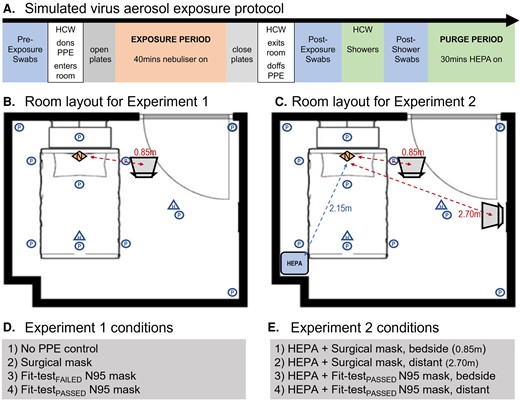
Image 2: HEPA Vs No HEPA Experiment Conditions

Image 2: Room Layouts and Experiment 1 and 2 Conditions In Experiment 1, No HEPA (B and D), the healthcare worker (HCW) was seated at the bedside, 0.85 m from the aerosol source for all conditions: (1) No PPE control; (2) Surgical Mask (3) Fit test Failed Mask) and (D) Fit test passed Mask; In Experiment 2, with HEPA, (C and E) the high-efficiency particulate air (HEPA) filter was positioned at the foot and opposite side of the bed to the HCW, 2.15 m from the nebulizer. The HCW was positioned either at the same beside position as experiment 1 (0.85 m) or at a distanced location (2.70 m) from the nebulizer. Conditions (1) HEPA + Surgical Bedside (2) HEPA + Surgical, distant (3) HEPA + Fit-test Passed N95 bedside (4) HEPA + Fit-test Passed N95 mask, distant. | Credit: From Figure 1 of Fit-Tested N95 Masks Combined With Portable High-Efficiency Particulate Air Filtration Can Protect Against High Aerosolized Viral Loads Over Prolonged Periods at Close Range [7].

Importantly, the study shows even with the best-fitting N95 mask, there was still viral aerosol contamination of the nose after 40 minutes of exposure to high viral aerosol load at close range in the absence of enhanced filtration (13 ACH). Thus, adding ventilation and filtration can make a difference between getting infected and not. Wearing the correct type of mask (an N95 respirator, not a surgical mask) also made a difference between infection or no infection. The researchers state: 


“Our study is the first to conduct live virus aerosol experiments to systematically examine HCW virus contamination and the interaction between virus aerosol, PPE, and air filtration using a portable HEPA filter. We found that the combination of an N95 mask that passed a quantitative fit-test and a portable HEPA filter provided near complete protection against high viral aerosol loads at close range for prolonged periods of time. Critically, surgical masks provided inadequate protection against skin and upper airway contamination, even when combined with HEPA filtration and at distances of 2.70 m. In light of aerosol transmission of SARS-CoV-2 and the emergence of more transmissible variants of concern, our findings have immediate and broad implications for the protection of HCWs” [7].


Studies continue to show that ventilation and filtration are imperative for reducing infections and providing access to safe environments, where people can then use high quality masks to protect themselves, their classmates, coworkers, and households from COVID-19. We can see this effect’s practical implication in reducing illness-related absences in schools and workplaces.

Effects of Ventilation and Filtration on Absences and Viral Incidence in Classrooms

A 2023 study by Deng, et al. [8] found that ventilation rates and indoor PM2.5 levels were significantly associated with illness-related absences. Data from 144 classrooms in 31 schools in the US showed that every additional 1 μg/m3 of indoor PM2.5 (that is, higher amounts of small particle pollution in the air) was associated with an increase of 7.37 absences per year, whereas every 1 L/s per person increase in ventilation/ filtration rate was associated with a decrease of 5.59 absences per year. The researchers conclude: 


The benefits of retrofitting and upgrading schools to improve ventilation and control PM2.5 go beyond illness-related absences, as those two interventions also significantly reduce the risk of infection. Outbreaks of COVID-19 through the transmission of virus-laden particles in indoor spaces (which is suspected to be the dominant indoor mode of transmission for respiratory infections) emphasize the importance of healthy indoor environments for public health. Benefits will stretch beyond local epidemic or worldwide pandemic periods.”


A 2021 study by Gettings, et al. [9] looked at the impact of masks and ventilation/ filtration in elementary schools on COVID-19 incidence, and found COVID-19 incidence was 37% lower in schools that required teachers and staff members to use masks and 39% lower in schools that improved ventilation/ filtration. When staff masking was combined with filtration methods, there was a 48% lower incidence of COVID-19 in the school. These ventilation and filtration strategies help everyone even when not everyone is masking, although the combination of masking along with ventilation/filtration is the best way for individuals to protect themselves and others.

What Does It All Mean?

Our exploration into the interplay of time, viral density, and filtration underscores the importance of a multi-layered approach to COVID-19 prevention. Time and viral density significantly affect infection risk, emphasizing the need for robust filtration and ventilation systems in conjunction with high-quality masks. Studies show that while masks are essential, their effectiveness is greatly enhanced in virus-limited environments achieved through adequate ventilation and filtration. This combination not only protects individuals but also reduces overall viral transmission in indoor spaces.


As we continue to adapt to the challenges of COVID-19, it is clear that integrating these preventive measures can significantly improve public health outcomes. In our next installment (Part 6: Why At Air Support Project We Strive for 6 to 12 ACH) we will dig deeper into the specifics of achieving optimal air changes per hour (ACH) to maximize protection. Stay tuned as we continue to explore the best strategies for creating safe and healthy indoor environments.

Image 4: Dreamy city-scape with a hot air balloon and clock floating in the sky.

“Time magnifies the margin between success and failure. It will multiply whatever you feed it.”

[1] Parhizkar, H., Dietz, L., Olsen-Martinez, A., Horve, P. F., Barnatan, L., Northcutt, D., & Van Den Wymelenberg, K. G. (2022). Quantifying Environmental Mitigation of Aerosol Viral Load in a Controlled Chamber With Participants Diagnosed With Coronavirus Disease 2019. Clinical Infectious Diseases/Clinical Infectious Diseases (Online. University of Chicago. Press)75(1), e174–e184. https://doi.org/10.1093/cid/ciac006 

[2] Iqbal, S. S. (2023, September 25). Here’s how much coronavirus people infected with COVID-19 may exhale. Science Newshttps://www.sciencenews.org/article/coronavirus-infected-covid-19-exhale 

[3] Alsved, M., Nyström, K., Thuresson, S., Nygren, D., Patzi-Churqui, M., Hussein, T., Fraenkel, C., Medstrand, P., & Löndahl, J. (2023). Infectivity of exhaled SARS-CoV-2 aerosols is sufficient to transmit covid-19 within minutes. Scientific Reports13(1). https://doi.org/10.1038/s41598-023-47829-8 

[4] Cheng, Y., Ma, N., Witt, C., Rapp, S., Wild, P. S., Andreae, M. O., Pöschl, U., & Su, H. (2021). Face masks effectively limit the probability of SARS-CoV-2 transmission. Science372(6549), 1439–1443. https://doi.org/10.1126/science.abg6296 

[5] Marquez, C., Kerkhoff, A. D., Schrom, J., Rojas, S., Black, D., Mitchell, A., Wang, C., Pilarowski, G., Ribeiro, S., Jones, D., Payan, J., Manganelli, S., Rojas, S., Lemus, J., Jain, V., Chamie, G., Tulier-Laiwa, V., Petersen, M., DeRisi, J., & Havlir, D. V. (2022). COVID-19 symptoms and duration of rapid antigen test positivity at a community testing and surveillance site during Pre-Delta, Delta, and Omicron BA.1 periods. JAMA Network Open5(10), e2235844. https://doi.org/10.1001/jamanetworkopen.2022.35844 

[6] Lane, G., Zhou, G., Hultquist, J. F., Simons, L. M., Redondo, R. L., Ozer, E. A., McCarthy, D. M., Ison, M. G., Achenbach, C. J., Wang, X., Wai, C. M., Wyatt, E., Aalsburg, A., Yang, Q., Noto, T., Alisoltani, A., Ysselstein, D., Awatramani, R., Murphy, R., . . . Zelano, C. (2023). Quantity of SARS-CoV-2 RNA copies exhaled per minute during natural breathing over the course of COVID-19 infection. medRxiv (Cold Spring Harbor Laboratory)https://doi.org/10.1101/2023.09.06.23295138 

[7] Landry, S. A., Subedi, D., Barr, J. J., MacDonald, M. I., Dix, S., Kutey, D. M., Mansfield, D., Hamilton, G. S., Edwards, B. A., & Joosten, S. A. (2022). Fit-Tested N95 masks combined with portable High-Efficiency Particulate Air filtration can protect against high aerosolized viral loads over prolonged periods at close range. The Journal of Infectious Diseases (Online. University of Chicago Press)/ The Journal of Infectious Diseases226(2), 199–207. https://doi.org/10.1093/infdis/jiac195 

[8] Deng, S., Lau, J., Wang, Z., & Wargocki, P. (2023). Associations between illness-related absences and ventilation and indoor PM2.5 in elementary schools of the Midwestern United States. Environment International176, 107944. https://doi.org/10.1016/j.envint.2023.107944 

[9] Gettings, J., Czarnik, M., Morris, E., Haller, E., Thompson-Paul, A. M., Rasberry, C., Lanzieri, T. M., Smith-Grant, J., Aholou, T. M., Thomas, E., Drenzek, C., & MacKellar, D. (2021). Mask use and ventilation improvements to reduce COVID-19 incidence in elementary schools — Georgia, November 16–December 11, 2020. Morbidity and Mortality Weekly Report70(21), 779–784. https://doi.org/10.15585/mmwr.mm7021e1

Picture of Sarah Masih, MD, MBA

Sarah Masih, MD, MBA

Sarah Masih is the Executive Director of Air Support Project and has extensive experience in project management, fundraising, and communications. Her deep commitment to public health and her collaborative approach with community organizations and health experts make her a vital force in the fight for cleaner air and healthier communities.

Picture of SHEA O'NEIL

SHEA O'NEIL

Volunteer
Creator of COVID-conscious advocacy works: writings, art, and social networking. BA degree in psychology, with over 11 years of continued education studies in allergy and autoimmune research, and continued research the past 3 years into airborne irritants and COVID-19. Parent, disabled rights advocate.

Picture of S. Riley

S. Riley

S. Riley is a mutlidisciplinary content creator and technology enthusiast with a background in crowdfunding and project management. He holds a BA in English, and is grateful to be able to utilize his unique skill set in service of Air Support Project's humanitarian mission.

Picture of Melissa Smallwood

Melissa Smallwood

Melissa Smallwood is Science and Technology Policy researcher with a background in neuroscience, psychology, and social science, and the author of The Future of Long COVID: A Threatcasting Approach. They are interested in how disability and healthcare justice intersect with emerging technologies, and are an advocate for COVID mitigation strategies to help end the pandemic.

COVID Blog Series

Discover how to protect yourself and others from COVID-19 and other respiratory-spread pathogens. Our COVID blog series is applicable to all airborne contaminants. Know Better, Breathe Better.

KNOW BETTER, BREATHE BETTER.

“I must fight with all my strength so that the little positive things that my health allows me to do might be pointed toward helping the revolution. The only real reason for living.”

FRIDA KAHLO